The pour-over method, step by step
A reliable 1:16 recipe, the bloom and how to adjust by taste and time.

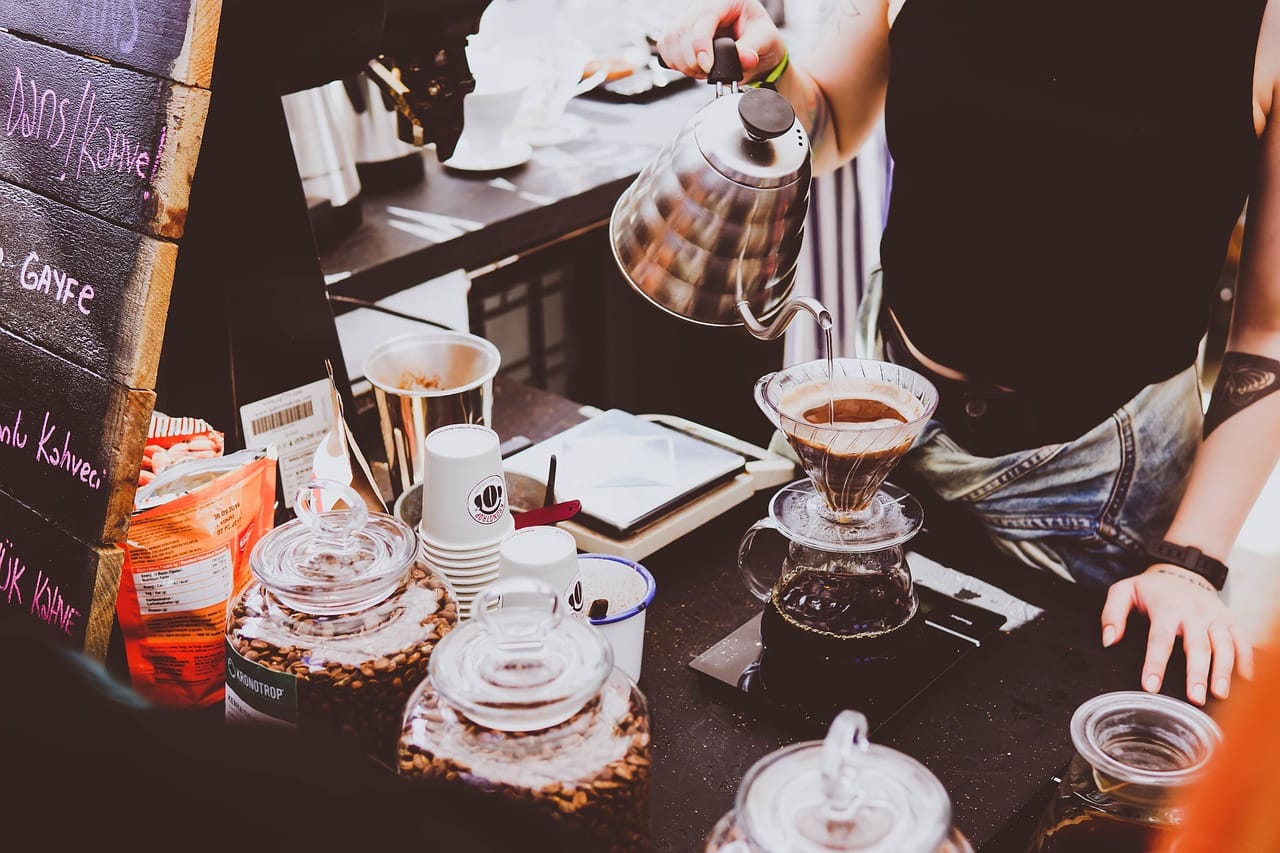
Pour-over is the simplest way to make clean, sweet, expressive coffee at home. You pour hot water over ground coffee in a filter and let gravity do the rest. It takes about four minutes and needs very little equipment. In this lesson you will learn a reliable recipe and the reasons behind each step.
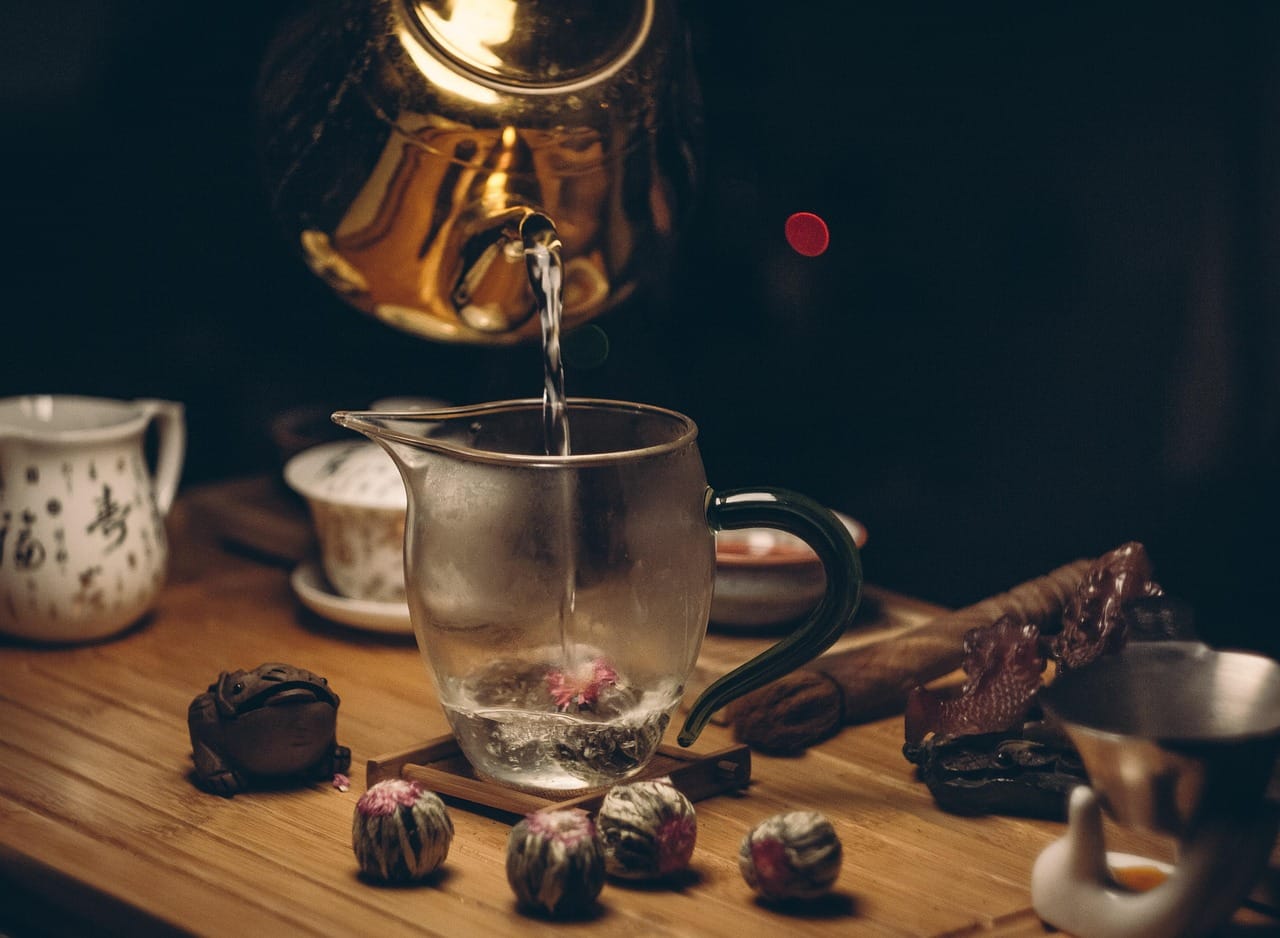
What you need
- A pour-over dripper, with paper filters that fit it
- A burr grinder, or beans ground medium-fine
- A kettle, ideally with a thin "gooseneck" spout
- A digital scale that weighs in grams
- A timer (your phone is fine)
- A mug or a small jug
The scale matters more than people expect. Coffee is a recipe, and a recipe needs measurements. Scoops and "about a mug" give different results every day.
The recipe
Our starting ratio is 1:16: one gram of coffee to sixteen grams of water. For one large mug:
| Ingredient | Amount |
|---|---|
| Coffee | 15 g, ground medium-fine |
| Water | 250 g, just off the boil (about 93–96°C) |
| Total time | 3 to 3½ minutes |
Water that has boiled and rested for 30 seconds is close enough to the right temperature.
Step by step
- Rinse the filter. Put the paper filter in the dripper and pour hot water through it. This removes the papery taste and warms the dripper. Throw this water away.
- Add the coffee. Put the ground coffee in the filter, shake it flat and put everything on the scale. Set the scale to zero.
- Bloom. Start the timer and pour about 40 g of water, just enough to wet all the coffee. Wait 30–45 seconds. The coffee bubbles and rises as carbon dioxide escapes.
- Main pour. Pour slowly in small circles, from the centre outwards and back, avoiding the paper. Reach 150 g by about 1:15.
- Final pour. Pour to 250 g by about 1:45.
- Drain. Give the dripper a gentle swirl to flatten the bed of coffee. Let it drain. It should finish between 3:00 and 3:30.
Why the bloom matters
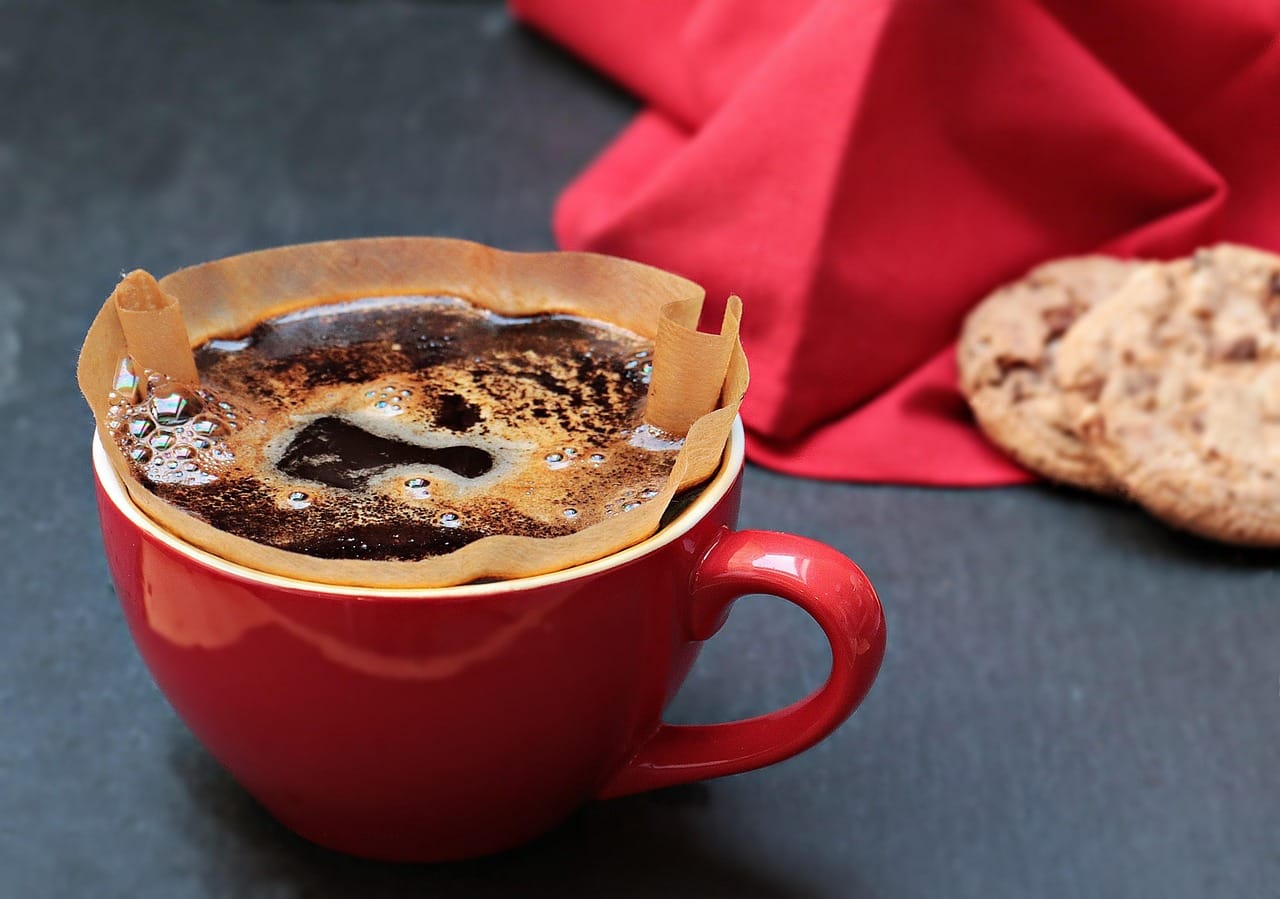
Fresh coffee contains carbon dioxide. If you pour all the water at once, the gas pushes water away from parts of the coffee, and they under-extract. The bloom lets the gas escape first, so the rest of the water can reach every particle evenly.
Adjusting the recipe
Use taste and time together:
- Sour and fast (under 2:45): grind finer.
- Bitter and slow (over 4:00): grind coarser.
- Tastes right but weak: use a stronger ratio, such as 1:15.
- Tastes right but too strong: use a weaker ratio, such as 1:17.
Do I need a gooseneck kettle?
What about tap water?
Brewing for more people
To brew for two or three people, keep the ratio and scale everything up. For 500 g of water, use about 31 g of coffee. Grind a little coarser, as the deeper bed slows the flow, and split the main pour into three or four smaller pours. Expect a total time of about four minutes.
If your dripper is small, it may not hold enough coffee for more than two cups. In that case, brew twice or use a larger dripper. Overfilling makes the coffee extract unevenly.
When the drain is too slow
A slow drain usually means the grind is too fine, but there are other causes:
- Too many fines. Some grinders make a lot of dust. The dust clogs the paper. A better grinder, or a coarser setting, helps.
- Pouring too hard. A strong, fast pour digs into the coffee and pushes fines into the filter. Pour gently.
- Old beans. Very old coffee often drains faster and tastes flat. Very fresh coffee may drain slowly because of gas.
Making it a ritual
Many people love pour-over not only for the taste but for the few calm minutes it takes. Heat the water, weigh the beans, grind, bloom and pour. It is a small ritual that starts the day slowly, and it is one of the few kitchen tasks that rewards you for paying attention.
Quick check
What is our starting ratio?
- 1:10
- 1:16
- 1:25
Why do you rinse the paper filter?
- To make the coffee stronger
- To remove the paper taste and warm the dripper
- To cool the water down
The brew finished in 2:20 and tastes sour. What next?
- Grind finer
- Grind coarser
- Use more water
Questions and discussion